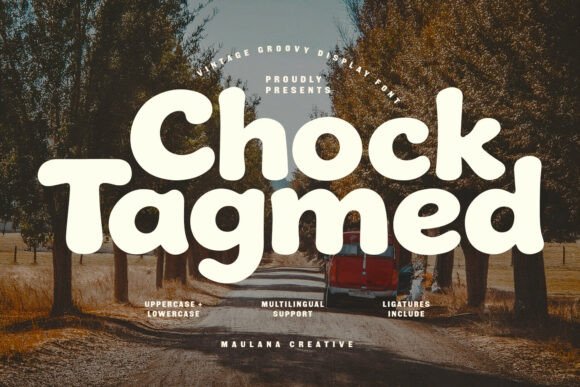
Chock Tagmed: A Retro Typeface for Modern Design
Every designer knows the struggle: finding a typeface that feels both nostalgic and fresh, playful yet professional. Enter Chock Tagmed, a bold display font that masterfully bridges the gap between classic 1970s charm and contemporary visual needs. Its soft, rounded edges and cheerful structure make it an instant mood-lifter for any project, offering a unique solution for brands and creators seeking warmth and personality in their typography.
More than just a set of letters, Chock Tagmed is a carefully crafted creative asset. It includes uppercase and lowercase characters, extensive multilingual support, numerals, punctuation, and distinctive ligatures. This comprehensive toolkit allows for seamless integration into a wide array of design workflows, from initial concept to final polished presentation. Understanding its core characteristics is the first step to leveraging its full potential.
Why Typography Choice Matters in Visual Design
In graphic design, typography is a fundamental pillar of visual communication. The right font does more than display words; it conveys tone, establishes hierarchy, and reinforces brand identity. A typeface like Chock Tagmed, with its inherent retro aesthetic, can instantly evoke specific emotions and associations—nostalgia, approachability, and creative flair. This makes it a powerful tool for shaping audience perception before they even read the content.
Selecting a typeface is a strategic decision. It must align with the project's goals, target audience, and overall brand system. For instance, a playful children's brand would benefit from Chock Tagmed's friendly vibe, while a luxury tech company might require a more minimalist sans-serif. The key is consistency; using a chosen typeface across all touchpoints builds a cohesive and recognizable brand identity.
Practical Applications for Chock Tagmed
The versatility of Chock Tagmed extends across numerous creative projects. Its bold, eye-catching nature makes it particularly effective in applications where grabbing attention is paramount.
- Branding and Logo Design: Create memorable logos and wordmarks that stand out. Its organic structure can soften a brand's image, making it more relatable and friendly.
- Marketing Materials: From posters and flyers to digital ads, this font ensures your message is seen. It pairs well with solid color palettes to create high-impact visual hierarchy.
- Social Media Graphics: Stop the scroll with bold headlines and engaging quotes. Its personality helps content stand out in crowded feeds, enhancing user engagement.
- Packaging Design: Ideal for products targeting a retro, artisan, or youth-oriented market. It can make shelf appeal a core part of the product experience.
- Editorial Layouts and Book Covers: Use it for chapter titles or cover art to inject energy and a distinct visual style into print and digital publications.
- Merchandise and Apparel: Perfect for t-shirt designs, tote bags, and other products where bold, graphic typography is the main visual element.
Integrating Chock Tagmed into Your Design Workflow
To use a display font like Chock Tagmed effectively, consider its role within the broader composition. It is rarely suited for long body text due to its decorative nature. Instead, pair it with a clean, highly readable sans-serif or serif font for paragraphs. This contrast creates a dynamic visual hierarchy, guiding the viewer's eye from the impactful headlines to the supporting information.
Always test scalability. A font that looks stunning on a large poster may lose legibility when reduced for a small UI button. Preview your designs at various sizes and on different devices. Furthermore, consider your color palette. Chock Tagmed's rounded forms often work beautifully with soft, warm colors or bold, contrasting hues that complement its retro vibe.
In a digital landscape saturated with generic fonts, choosing a distinctive typeface like Chock Tagmed can be a significant differentiator. It demonstrates a thoughtful approach to design, where every element is selected to support the message and connect with the audience on an emotional level. By investing in quality creative assets and applying them with strategic intent, designers and brands can elevate their work from merely functional to truly memorable, enhancing both aesthetics and communication in every project they undertake.